
Boiler Room at 15: How a London Basement Changed Club Culture Forever
From a Dalston flat stream to 300+ cities worldwide, Boiler Room rewired how we discover and experience electronic music. We trace the journey.
TL;DR
Boiler Room turned a low-res webcam stream into the world's most influential music platform. Fifteen years on, its impact on DJ culture, artist discovery, and live streaming is impossible to overstate.
A Webcam and a Dream
In 2010, Blaise Bellville set up a webcam in a Dalston flat and pointed it at a pair of CDJs. The audio was tinny, the video was grainy, and the chat was chaotic. It was perfect.
Boiler Room didn't invent the DJ set — it reinvented the audience. Suddenly, you didn't need to queue for three hours in Peckham to watch Ben UFO work a room into a frenzy. You just needed WiFi.
What started as a scrappy London experiment became a global institution. By 2025, Boiler Room has broadcast from over 300 cities, platformed thousands of artists, and racked up billions of views. Not bad for a webcam stream.
The Democratisation of the Dancefloor
Before Boiler Room, your exposure to underground club culture was limited by geography. If you lived outside London, Berlin, or Detroit, your options were limited to whatever your local promoter could book and whatever vinyl you could afford to import.
Boiler Room blew that wide open. A 16-year-old in Lagos could watch Floating Points perform in London. A bedroom producer in São Paulo could study Four Tet's mixing technique in real time. A DJ in Manchester could catch a set from a Tokyo selector they'd never heard of — and book them for a night the following month.
This wasn't just streaming. It was cultural infrastructure.
The Artist Discovery Engine
For emerging artists, a Boiler Room set became the ultimate calling card. Before algorithmic playlists and TikTok virality, a standout Boiler Room performance could transform a career overnight.
Ask any A&R scout working in electronic music between 2012 and 2020, and they'll tell you the same thing: Boiler Room was the first place they looked. The platform's curatorial instinct — championing artists like Peggy Gou, Mall Grab, and HAAi before they were household names — gave it credibility that no streaming algorithm could replicate.
The comment section became its own ecosystem. "ID?" became the most-typed word in dance music history. And those viewer-generated track IDs created a secondary discovery loop that fed back into the culture.
Growing Pains and Reinvention
It hasn't all been smooth. Boiler Room faced criticism for its door policies, its corporate partnerships, and the inevitable tension between underground credibility and mainstream scale. When brands started showing up, the purists got nervous.
But the platform adapted. Boiler Room expanded into documentary filmmaking, long-form storytelling, and cultural journalism. Its 4:3 series explored music scenes in underrepresented cities. Its partnerships with local collectives ensured that expansion didn't mean homogenisation.
By 2025, Boiler Room operates more like a cultural institution than a streaming platform — and that's exactly the point.
The Legacy
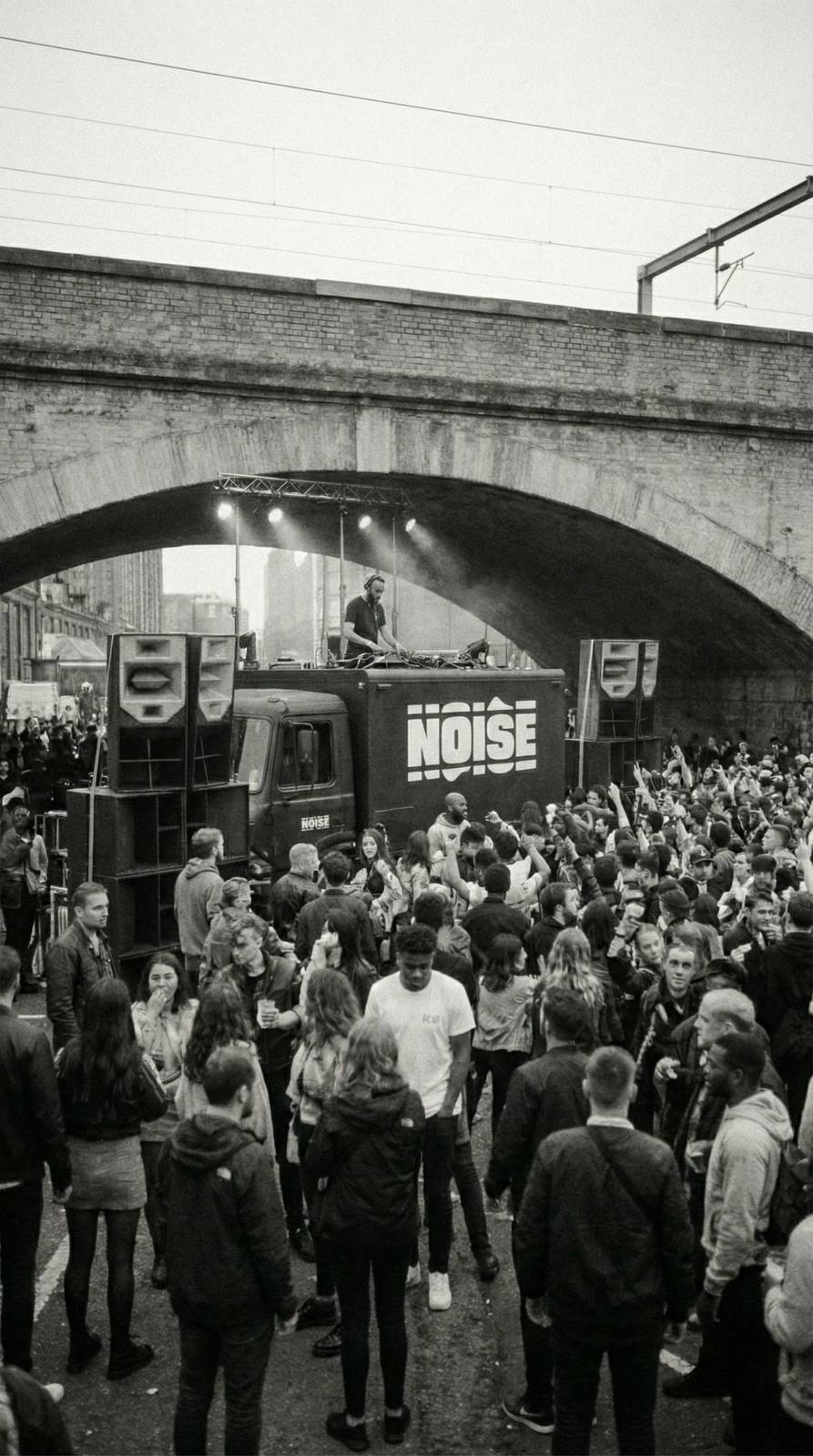
Boiler Room's influence extends far beyond its own broadcasts. It normalised the DJ set as content. It proved that underground music could build massive audiences without commercial radio. It created a visual language — the crowd behind the decks, the swaying camera, the intimate energy — that every live stream since has tried to replicate.
Fifteen years on, the original mission hasn't changed. Point a camera at great music. Let people watch. Trust the culture to do the rest.
That flat in Dalston is long gone. But what it started is everywhere.