


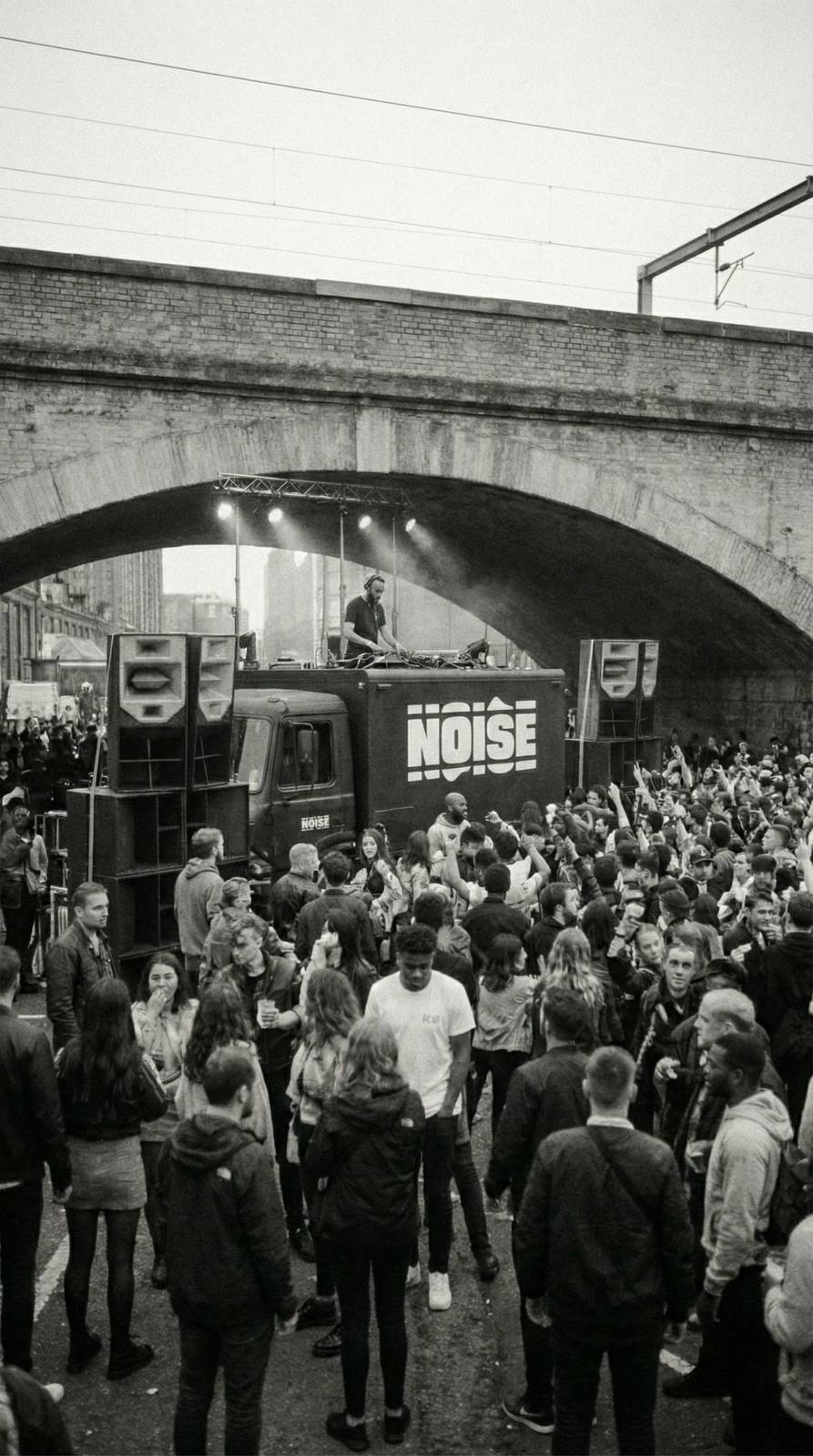
Anyone can release music now. That's incredible. But the flood of content creates a discovery crisis. How do we celebrate democratisation while maintaining standards?
TL;DR
The democratisation of music release is wonderful. But 100,000+ tracks uploaded daily to Spotify means genuine discovery is harder than ever. The solution isn't gatekeeping — it's better curation, stronger communities, and platforms that reward quality over volume.
The Democratisation Paradox
The ability for anyone to record and release music to a global audience is one of the greatest developments in music history. No artist should need a label's permission to share their work with the world. The barriers that once prevented talented people from diverse backgrounds from being heard have been rightfully dismantled.
But the flip side is real: over 100,000 tracks are uploaded to Spotify every single day. The vast majority receive fewer than 100 streams. The royalty pool is divided among more tracks than ever, reducing per-stream payments. And listeners face an overwhelming abundance of content that makes finding great music harder, not easier.
This is the democratisation paradox: removing barriers to entry is good for creators, but the resulting flood of content creates a discovery crisis that's bad for both creators and listeners. The challenge is addressing the discovery crisis without reinstating the barriers.
Gatekeeping vs Quality Curation
Old-school gatekeeping — where labels, radio stations, and retail decided what music existed commercially — was exclusionary, biased, and often corrupt. It favoured white men from middle-class backgrounds and systematically excluded vast swathes of musical talent. Its demise is not mourned.
Quality curation is different. It's the act of identifying, amplifying, and contextualising great music so that listeners can find it amid the flood. It doesn't prevent anyone from releasing music — it helps the best music rise above the noise. Blogs, playlist curators, radio DJs, music journalists, and communities all perform this curation function.
The distinction matters: gatekeeping says 'you can't release this.' Quality curation says 'this is really good — you should hear it.' One restricts; the other amplifies. We need far more of the latter and absolutely none of the former.
What Better Curation Looks Like
Algorithmic curation needs to value artistic quality alongside engagement metrics. This is technically challenging — how do you quantify artistic quality? — but not impossible. Metrics like save rate, repeat listen rate, and playlist add rate are rough proxies for quality that could be weighted more heavily than raw stream count.
Human curation needs investment and support. Music blogs, community radio, independent playlisters, and music journalists all provide quality curation, but most are understaffed and underfunded. Platforms that invest in human editorial — paying curators fairly, promoting editorial content, and giving editorial recommendations visibility alongside algorithmic ones — create better outcomes for artists and listeners.
Community curation is perhaps the most powerful model. Tight-knit music communities — whether online (Discord servers, Reddit communities, forums) or offline (local scenes, venue regulars, record shop cultures) — surface quality through genuine enthusiasm and word-of-mouth. These communities are the most authentic and effective discovery mechanisms available.
What Artists Can Do in a Crowded Landscape
Quality matters more than ever. When 100,000 tracks are uploaded daily, the bar for standing out is higher. This doesn't mean commercial polish — it means distinctive artistry. Music that sounds like nothing else has the best chance of being noticed by curators and listeners.
Build genuine community around your music. The artists who thrive in a crowded landscape aren't the ones with the most content — they're the ones with the most engaged communities. Even a small community of genuine fans who share your music actively creates more discovery than a million passive algorithmic impressions.
Release strategically, not constantly. The pressure to feed the algorithm with constant releases can dilute your output quality. Better to release four excellent tracks per year than twelve mediocre ones. Each release should be your best work, supported with genuine promotion and engagement.
The Noise Philosophy
At Noise, we're curators. Our role in the ecosystem is to listen to music, identify what's exceptional, and amplify it to the audiences who'll love it. We don't gatekeep — we open gates. We don't restrict — we spotlight.
We believe the answer to the democratisation paradox is more curation, not less access. More human ears listening to emerging music. More platforms for diverse voices. More communities forming around shared musical passion. More investment in the infrastructure that connects artists with audiences.
The future of music discovery is human-powered, community-driven, and quality-focused. And we'll be here, listening to every track that comes our way, championing the ones that make us feel something, and connecting artists with the listeners who need to hear them.