


How to Master Your Own Music: A Practical Guide for Independent Artists
Can't afford a mastering engineer? Self-mastering is more accessible than ever. Here's the honest guide to making your tracks sound professional.
TL;DR
Self-mastering is viable with the right tools and knowledge. Use reference tracks, master in a different session from your mix, apply processing gently (EQ, compression, limiting), and check on multiple playback systems. LANDR and CloudBounce are decent AI alternatives.
What Mastering Actually Does
Mastering is the final stage of audio production — the process of preparing a finished mix for distribution. A mastering engineer takes your stereo mix and optimises it for playback across all systems: streaming platforms, car speakers, headphones, club systems, phone speakers.
The typical mastering chain includes: tonal balance correction (EQ to ensure the frequency spectrum is balanced), dynamic processing (compression to add cohesion and control), stereo enhancement (widening or narrowing the stereo image where appropriate), and loudness optimisation (limiting to reach competitive loudness levels without distortion).
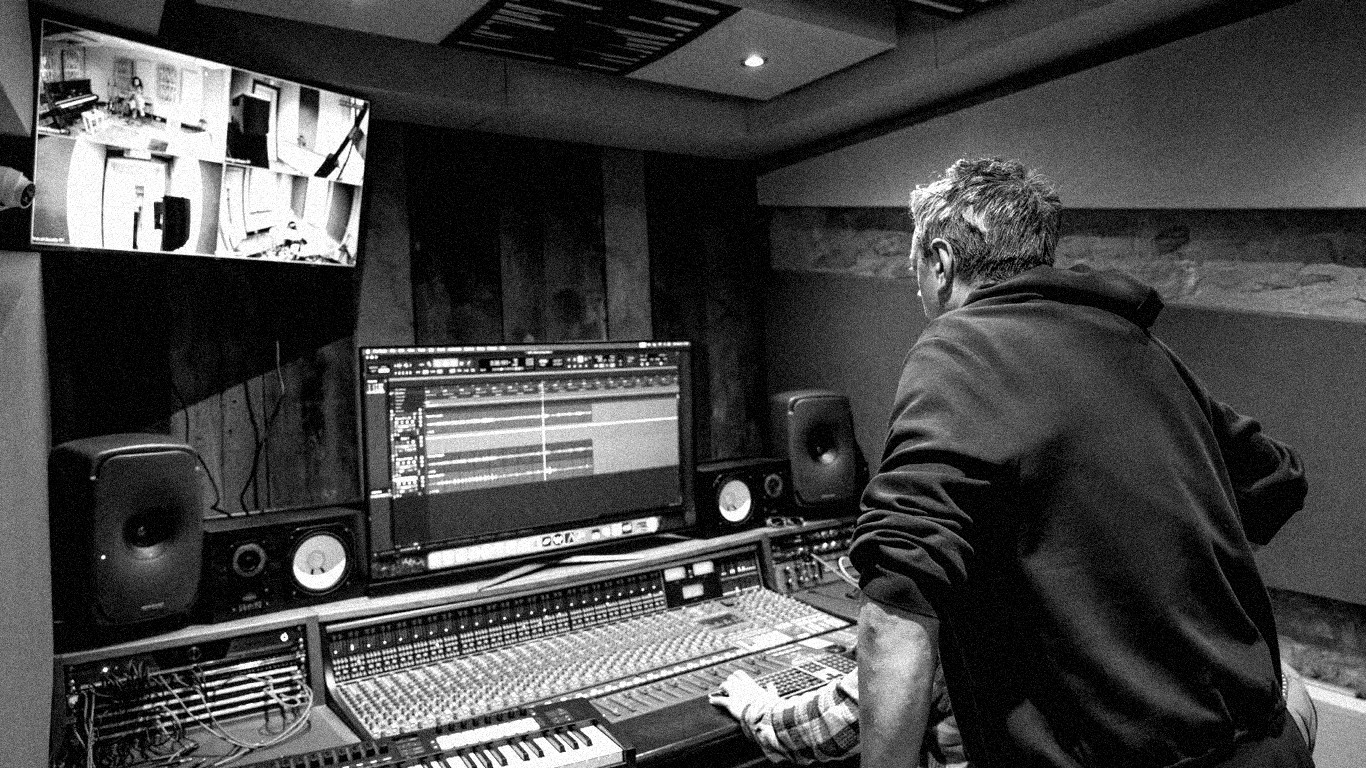
A professional mastering engineer brings experienced ears, calibrated monitoring, and an acoustic environment that reveals details your home studio can't. This is why hiring a mastering engineer is the recommended approach for important releases. But for singles, demos, and releases where budget is a constraint, self-mastering is a viable alternative.
Setting Up for Self-Mastering
Master in a separate session from your mix. Export your final mix as a high-resolution stereo file (24-bit WAV, same sample rate as your project), then open a new session for mastering. This separation provides perspective — you're listening to the mix as a finished piece rather than a collection of individual tracks.
Use reference tracks. Import 2-3 commercially released tracks in a similar genre and match their levels. A/B comparison against these references is the single most valuable mastering technique. If your master sounds thin, boomy, harsh, or quiet compared to the references, you know where to focus your processing.
Master at moderate volume. Loud monitoring flatters everything — you'll think your master sounds amazing until you hear it at normal volume. Mix and master at conversational volume levels for the most accurate assessment.
Take breaks. Ear fatigue accumulates and distorts your perception. Master in short sessions (30-60 minutes) with breaks between. Return to your master the next day with fresh ears before finalising.
The Self-Mastering Chain
Start with EQ. Gentle, broad corrections to address tonal imbalance. If the mix sounds muddy, a subtle cut around 200-400Hz can clarify. If it lacks sparkle, a gentle shelf boost above 10kHz adds air. Cuts of 1-2dB are usually sufficient — if you need more, the mix probably needs revision rather than mastering correction.
Compression next. A gentle bus compressor (1.5:1 to 2:1 ratio, slow attack, auto or medium release) adds glue and cohesion. Aim for 1-3dB of gain reduction. You should barely hear the compression working — if it's audible, it's too much.
Stereo processing if needed. Most mixes benefit from leaving the stereo image alone. If your mix sounds narrow, a subtle stereo widener on the high frequencies can add spaciousness. Never widen the bass — keep everything below 200Hz mono for translation across playback systems.
Limiting last. A limiter raises the overall loudness to commercial levels. For streaming platforms, target -14 LUFS integrated loudness — this is the normalisation target for Spotify and Apple Music. Pushing louder than -14 LUFS doesn't make your track louder on streaming platforms; it just triggers the platform's loudness normalisation, which turns it down. Keep your true peak below -1dBTP to prevent inter-sample clipping.
When to Hire a Professional Instead
Self-mastering is appropriate for: singles and demos, content for social media, releases where budget is the primary constraint, and tracks where you're comfortable with 'good enough' rather than 'optimised.'
Hire a professional for: debut albums and EPs, tracks being submitted to radio or sync libraries, releases with commercial aspirations, and any project where the mastering quality will directly impact your career trajectory.
A good independent mastering engineer charges £50-150 per track. For a 5-track EP, that's £250-750 — a significant investment but one that demonstrably improves the final product. The return on investment in terms of audio quality, competitive loudness, and cross-system translation is substantial.
The best approach for most emerging artists is to self-master your regular releases and invest in professional mastering for your key releases. This balances budget constraints with quality aspirations and ensures your most important music gets the treatment it deserves.


Comments
No comments yet. Be the first to share your thoughts.